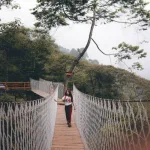
salakhalimunmountain.com – In the early morning, before village activity fully begins, Balong Endah feels suspended between worlds. Mist hangs low above gardens and forest edges, bird calls ripple through the trees, and water continues its steady descent from Mount Salak. This is the hour when the surrounding ecosystem speaks most clearly, revealing how deeply connected Balong Endah is to the living rainforest of Halimun Salak.
Nature here is not confined to protected zones alone. It flows outward from the national park, shaping rivers, soil, sound, and daily life. To understand Balong Endah is to understand its ecosystems, layered, adaptive, and quietly resilient.
The Rainforest Ecosystem Surrounding Balong Endah
The rainforest around Balong Endah forms part of the vast Halimun Salak National Park ecosystem, one of Java’s most important biodiversity strongholds. This region supports a mosaic of forest types, shaped by elevation, rainfall, and human stewardship over generations.
Closer to the village, the forest is a mix of secondary growth and managed vegetation. Further upslope, it transitions into denser rainforest with taller canopy trees, thicker undergrowth, and cooler air. This gradual change is critical. It allows species to move between zones, adapting to seasonal shifts without facing sudden ecological barriers.
Rather than a sharp boundary, the forest here fades in and out of human presence. Gardens blend into bamboo groves. Footpaths soften into leaf-covered trails. This continuity supports a rich web of life that depends on both protected forest and carefully used land.
Rivers as Ecological Arteries
Water is the backbone of Balong Endah’s ecosystem. Numerous small rivers and streams originate higher on Mount Salak and weave through forest and village alike. These waterways regulate temperature, transport nutrients, and provide habitat for countless organisms.
Along riverbanks, vegetation thickens. Ferns, mosses, and low shrubs cling to damp soil and stones. Fallen leaves collect in shallow pools, feeding insects and microorganisms. Amphibians depend on these clean, shaded waters to breed and survive.
Healthy rivers indicate healthy forest. Any disruption upstream, whether erosion or pollution, travels quickly downstream. The continued clarity and flow of Balong Endah’s rivers reflect the effectiveness of forest protection within the national park and the care taken by local communities.
Forest Edges and Bamboo Groves
The forest edge is where much of Balong Endah’s biodiversity activity concentrates. This transitional zone supports species from both open and closed habitats, making it one of the most dynamic ecological spaces.
Bamboo groves play an important role here. They stabilize soil, regulate water flow, and provide shelter for birds and small mammals. Their hollow stems create microhabitats for insects and amphibians, while fallen bamboo enriches the forest floor.
These groves also serve practical purposes for villagers, offering materials for tools and construction. When managed sustainably, bamboo becomes a bridge between human needs and ecological balance.
Secondary Forest and Regeneration
Secondary forest around Balong Endah tells a story of recovery. These areas, once cultivated or logged lightly, have been allowed to regenerate. Young trees rise among older survivors, creating layered canopies that support diverse life.
Secondary forests are often misunderstood as less valuable. In reality, they provide crucial habitat, especially for adaptable species. They also act as buffers, absorbing pressure that might otherwise reach core rainforest zones.
In Balong Endah, regeneration is visible and ongoing. It reflects long-term thinking, where forest health is measured not by perfection, but by resilience.
Birdlife and Forest Soundscapes
Bird calls define the soundscape of Balong Endah. At dawn and dusk, the forest resonates with whistles, clicks, and layered songs. Each sound marks territory, signals movement, or responds to changing light.
Bird species here range from small insectivores flitting through undergrowth to larger canopy dwellers moving between fruiting trees. Even without visual confirmation, attentive listeners can distinguish patterns, learning when certain calls appear and fade.
Birds act as ecological indicators. Their presence reflects forest structure, food availability, and water quality. The continued richness of bird calls around Balong Endah suggests an ecosystem still functioning as intended.
Insects and Amphibians of the Forest Floor
Insects dominate life beneath the canopy. Beetles, ants, cicadas, and butterflies occupy every layer, from soil to treetops. They pollinate plants, recycle organic matter, and form the base of the food web.
Amphibians are especially sensitive to environmental change. Frogs and toads thrive along clean streams and damp forest edges. Their calls after rainfall are among the clearest signs of ecosystem health.
Because amphibians absorb water through their skin, they respond quickly to pollution and habitat loss. Their continued presence around Balong Endah signals stable conditions and careful land use.
Possible Mammal Presence
Larger mammals around Balong Endah tend to remain unseen, moving quietly through forest corridors. Tracks, droppings, and broken vegetation sometimes hint at their presence. These signs matter more than sightings.
The ability for mammals to move between forest zones depends on uninterrupted habitat. Buffer areas like Balong Endah are essential, allowing animals to avoid human conflict while accessing food and shelter.
Respecting these invisible pathways is part of responsible visiting. Staying on established trails and avoiding night disturbance helps maintain this delicate balance.
The Importance of Buffer Zones
Balong Endah exists within a buffer zone designed to protect Halimun Salak National Park. These zones reduce pressure on core conservation areas while supporting sustainable human activity.
Buffer zones absorb impact. They allow agriculture, settlement, and controlled access without pushing exploitation deeper into the forest. When managed well, they strengthen conservation outcomes.
Balong Endah demonstrates how buffer zones can function successfully, supporting both biodiversity and community life.
Why Quiet Observation Matters
Nature around Balong Endah reveals itself slowly. Loud movement, rushed walking, or constant noise disrupt wildlife behavior and limit what can be observed.
Quiet observation allows patterns to emerge. Insects resume activity. Birds return to feeding. The forest breath becomes audible again.
Visitors who slow down gain more than photographs. They gain understanding. This approach aligns with conservation ethics and deepens the experience of Salak Halimun’s living systems.
Learning from the Living Forest
The ecosystems around Balong Endah are not static displays. They are adaptive, interconnected, and responsive. Every stream, call, and shadow reflects long-term relationships between land, water, and people.
By observing quietly and moving responsibly, visitors become temporary participants in this system rather than external observers.
So, if you’re ready to explore the wonders of Mount Salak Halimun, head over to our ONLINE BOOKING PAGE and let’s start planning your adventure. Or simply CLICK THIS LINK to chat with us on WhatsApp.
With our team, you’re not just getting a guide; you’re gaining a local friend who will ensure your trip is nothing short of extraordinary.